Decentralized Synchronization
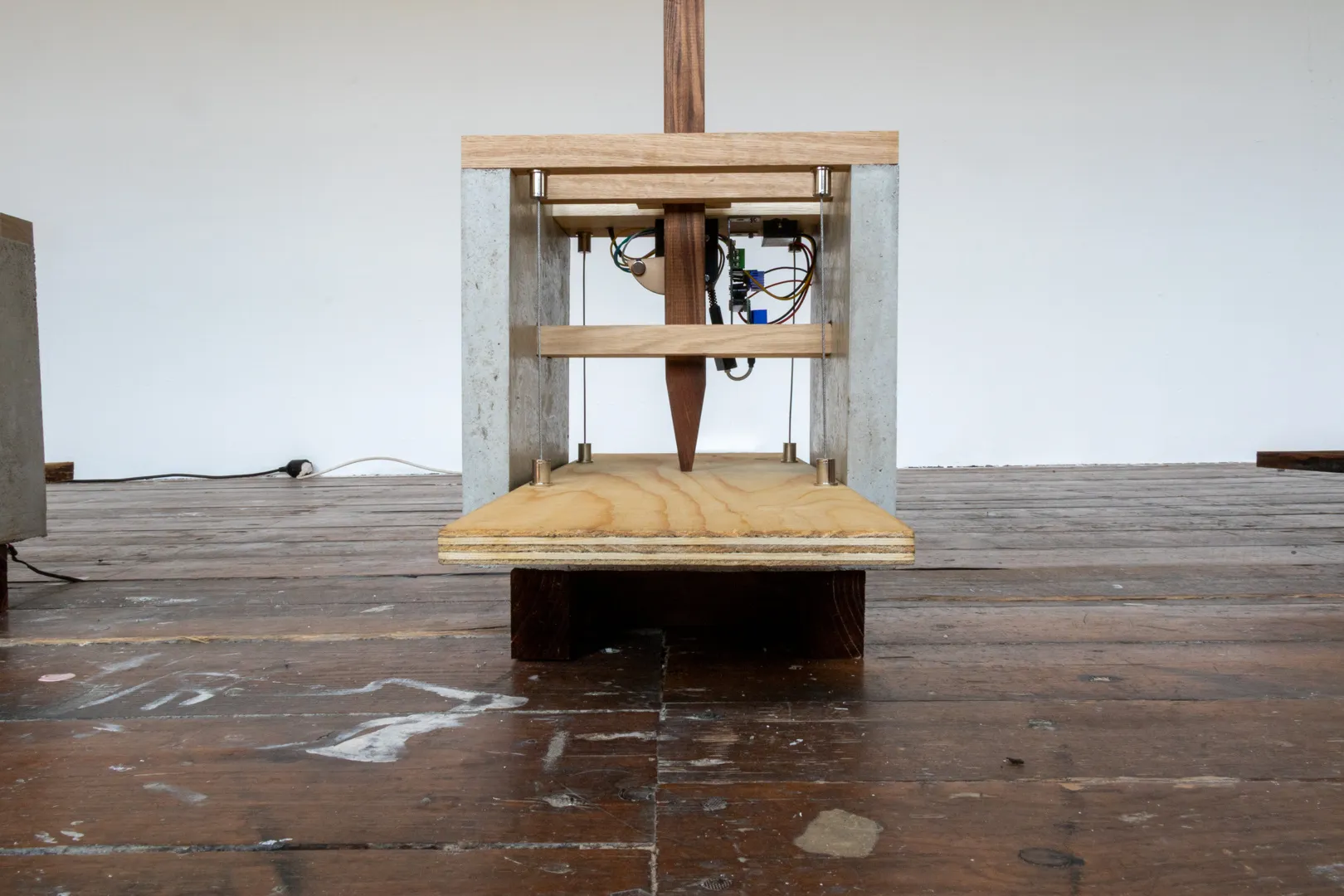
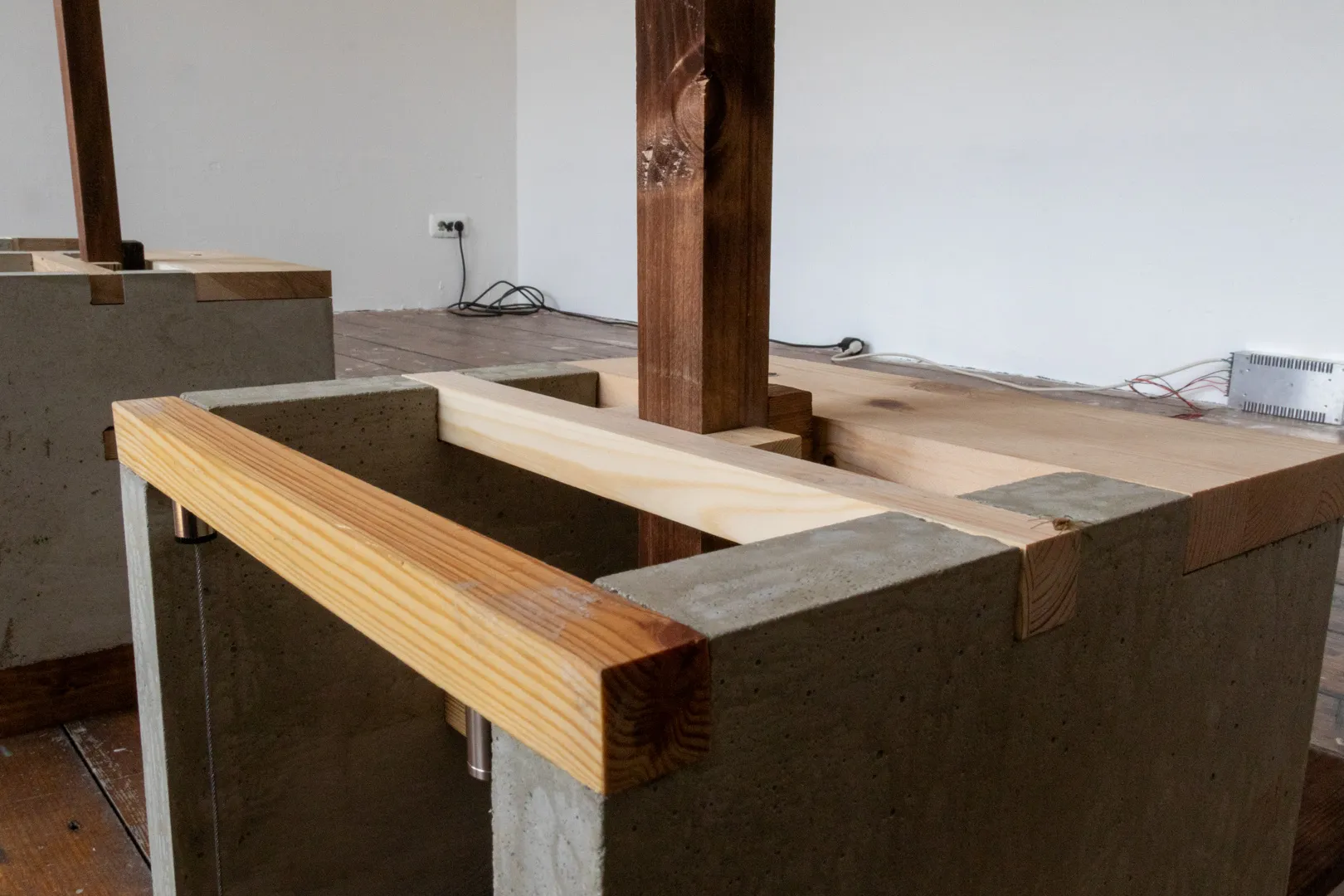
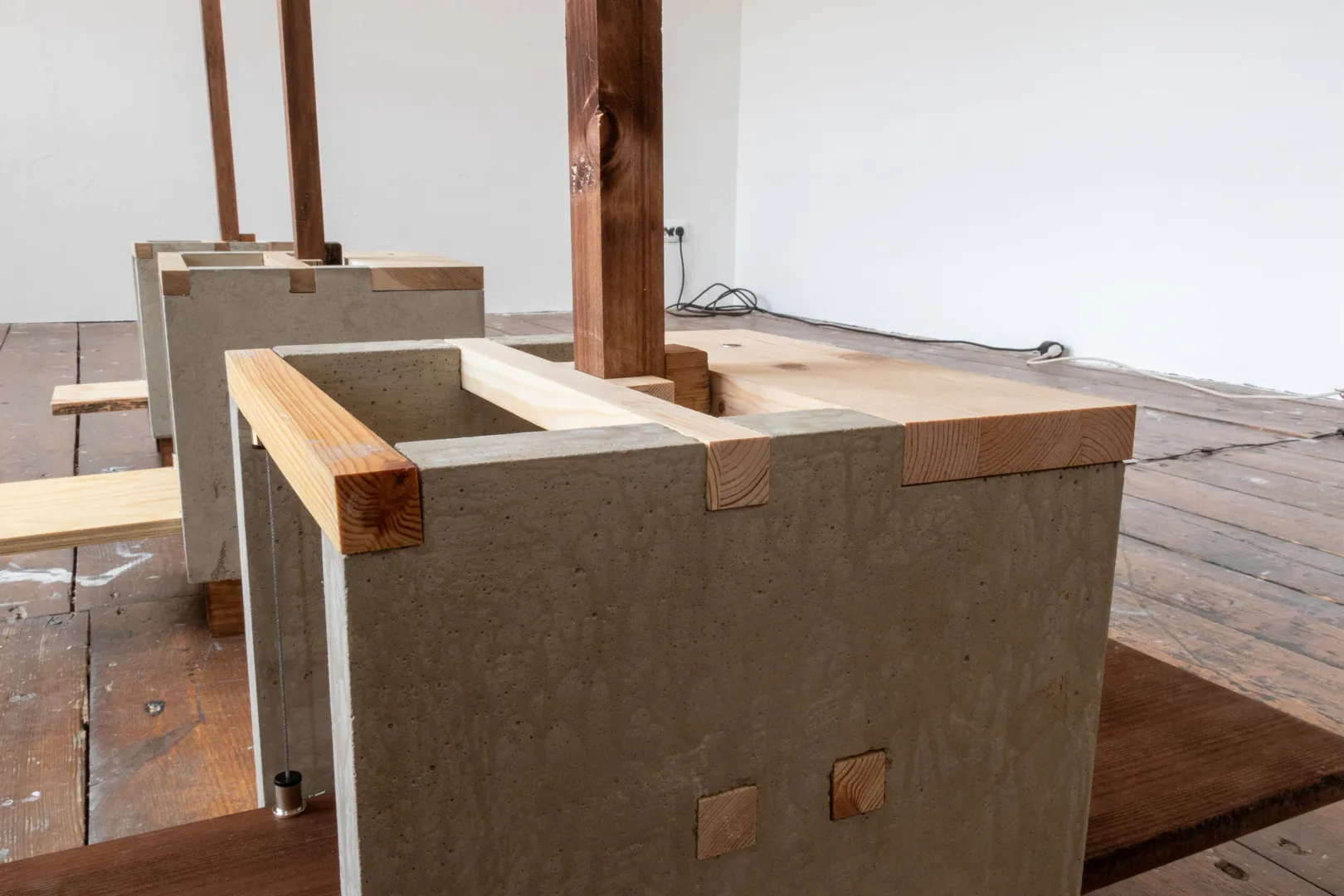
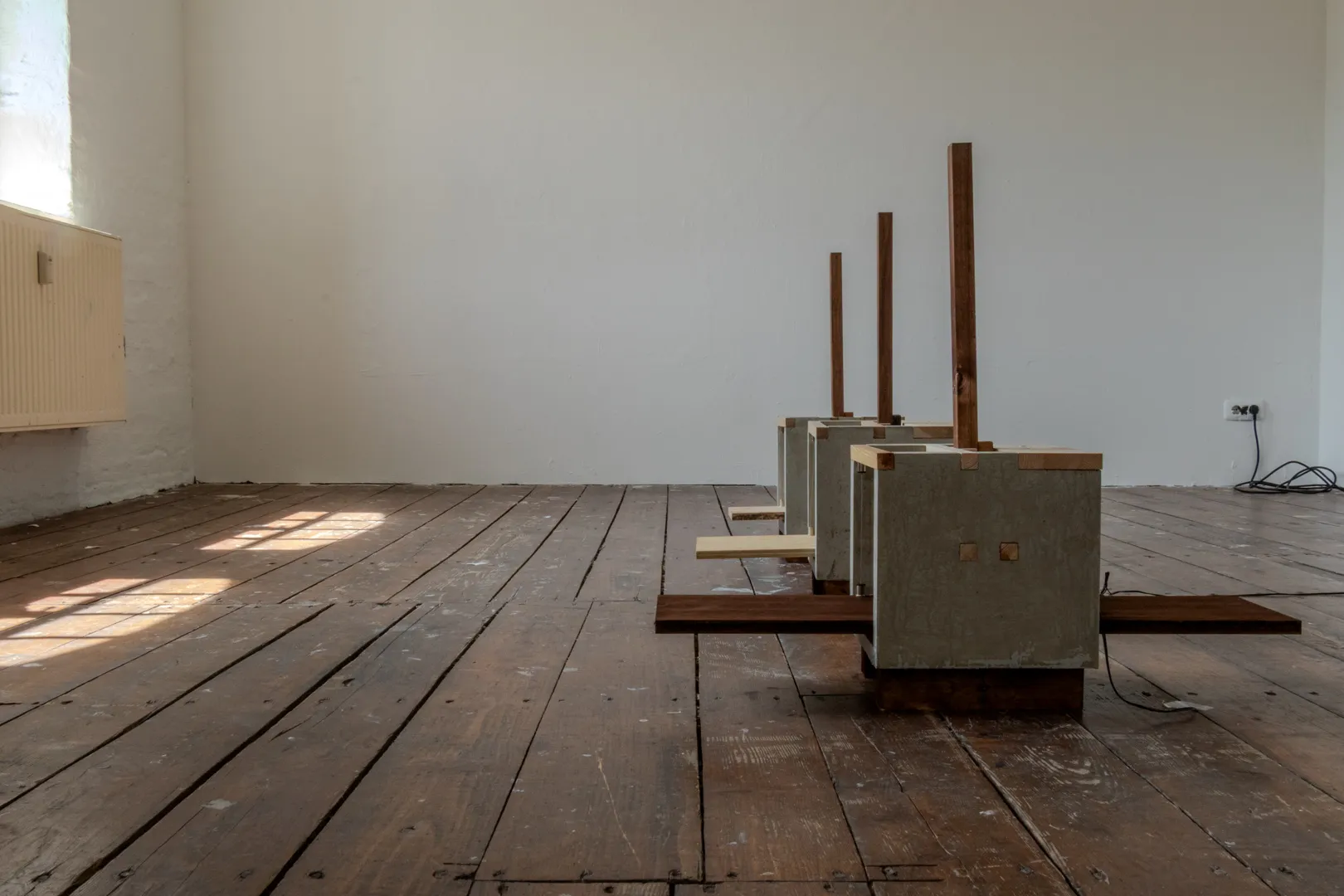
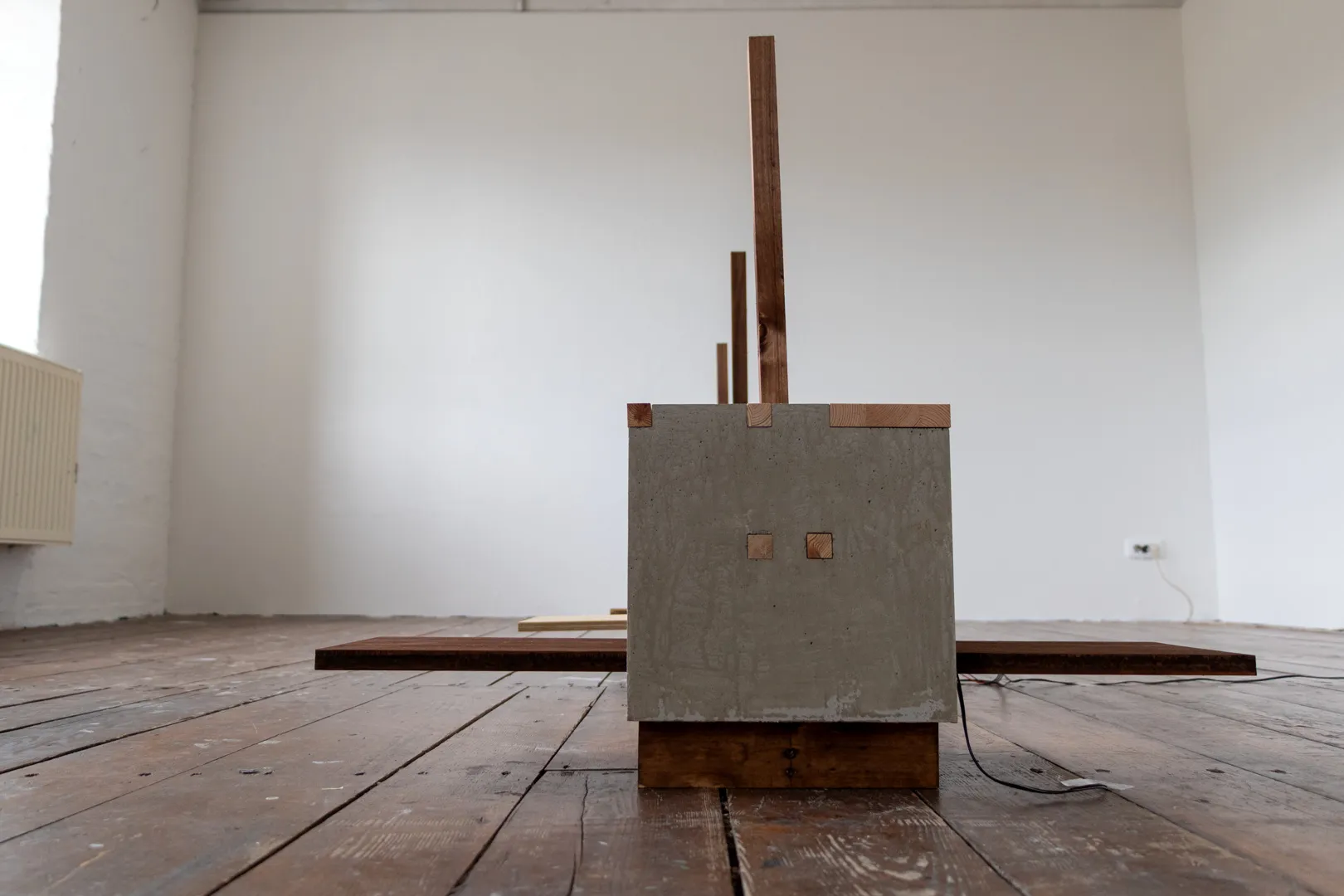
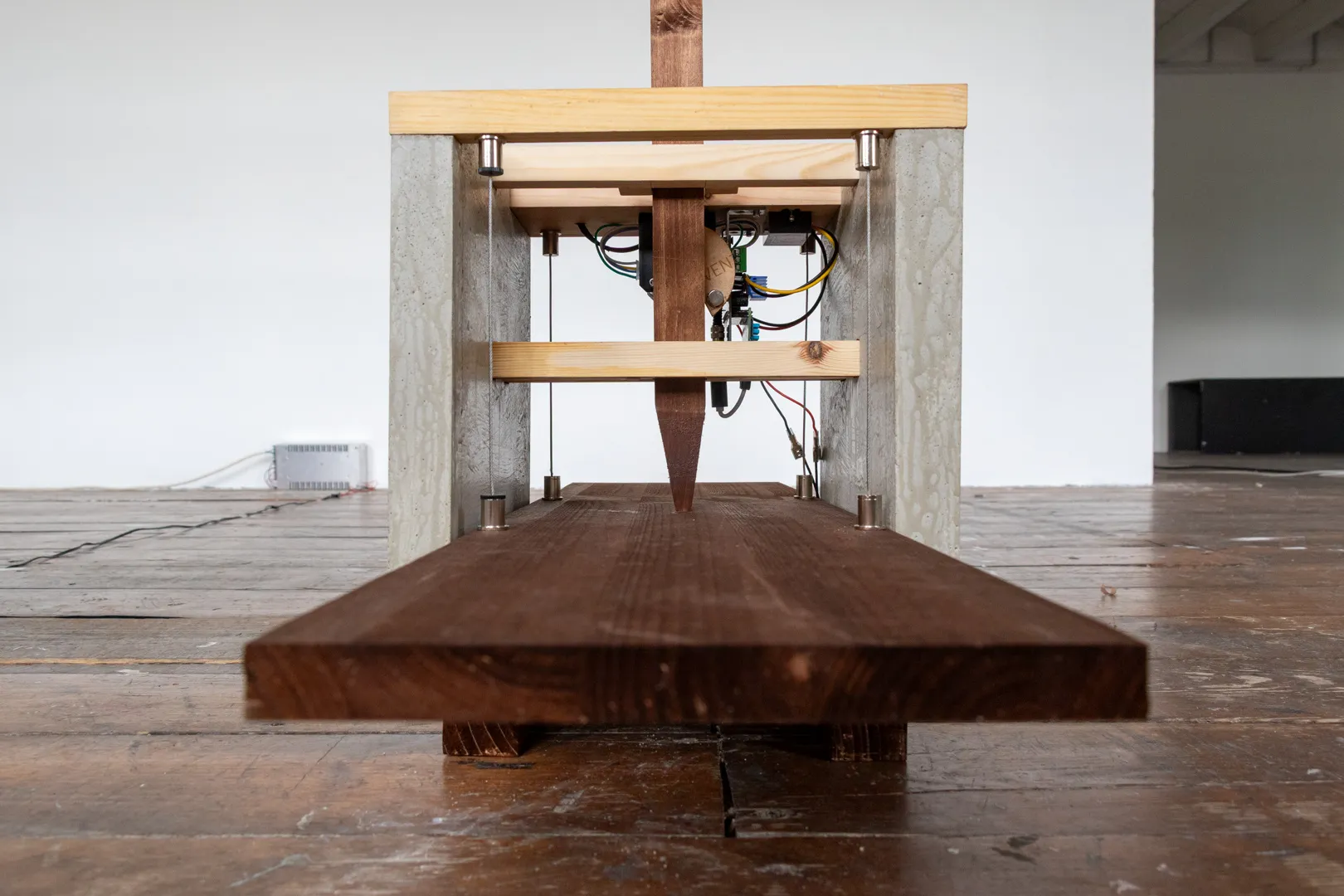
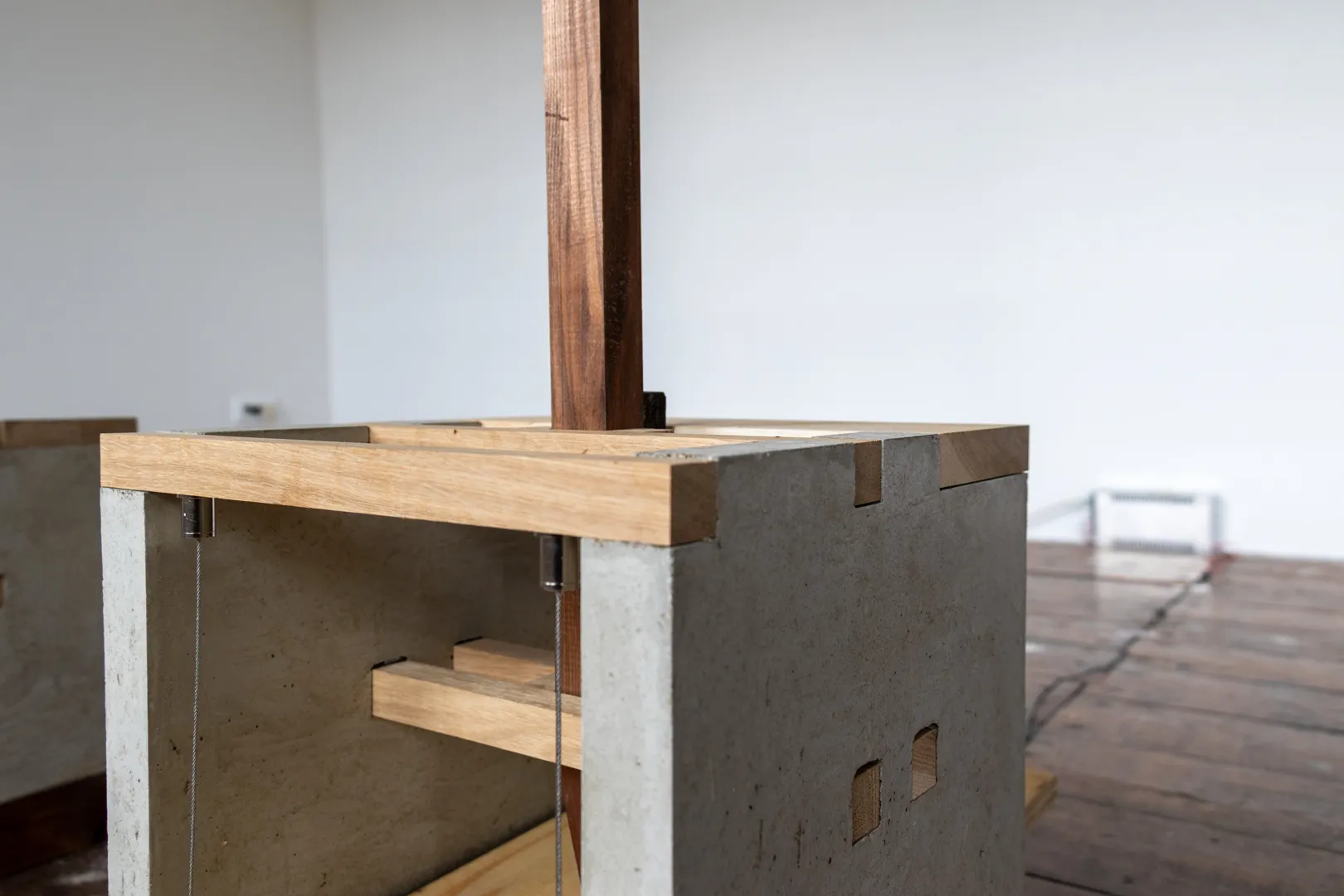
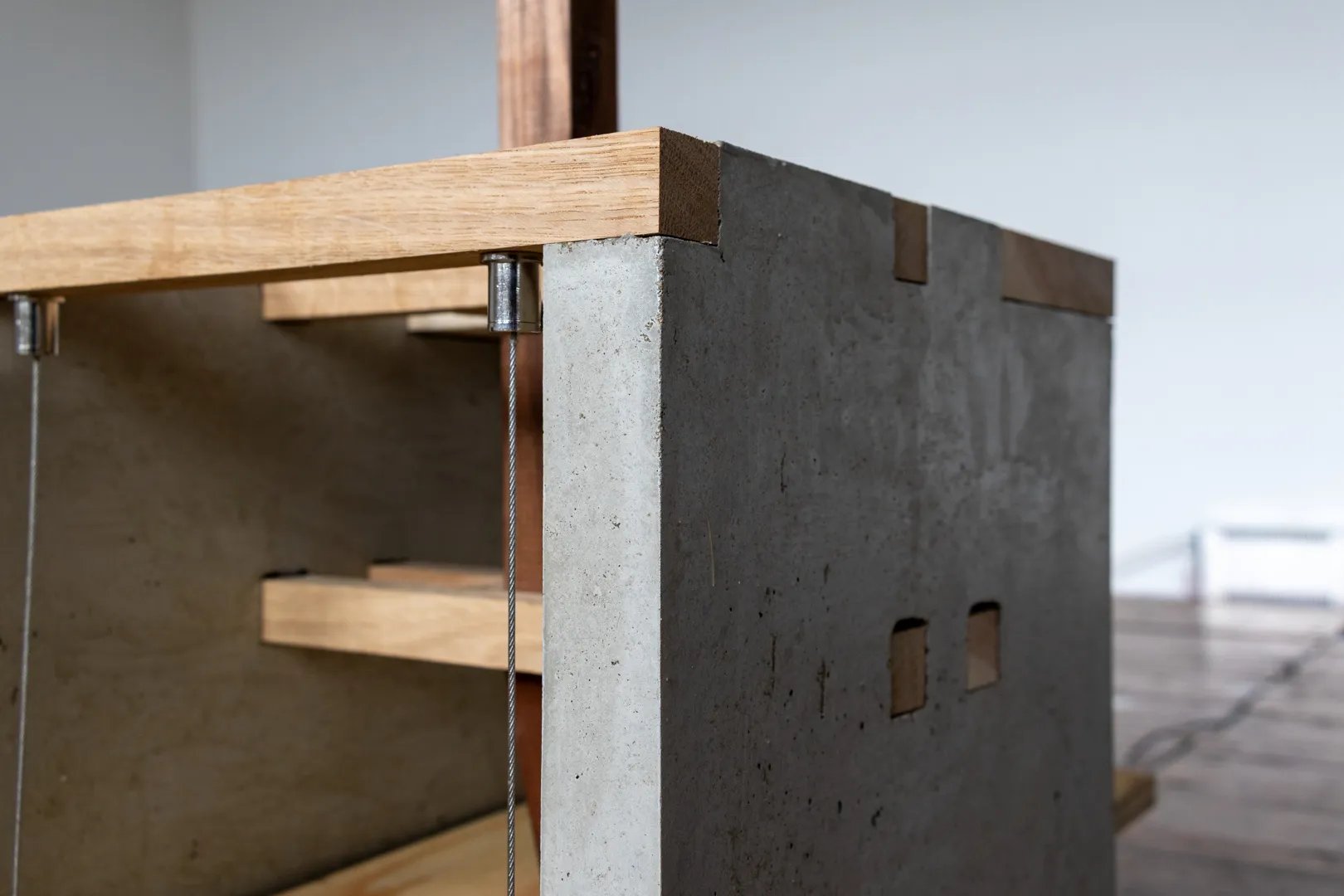
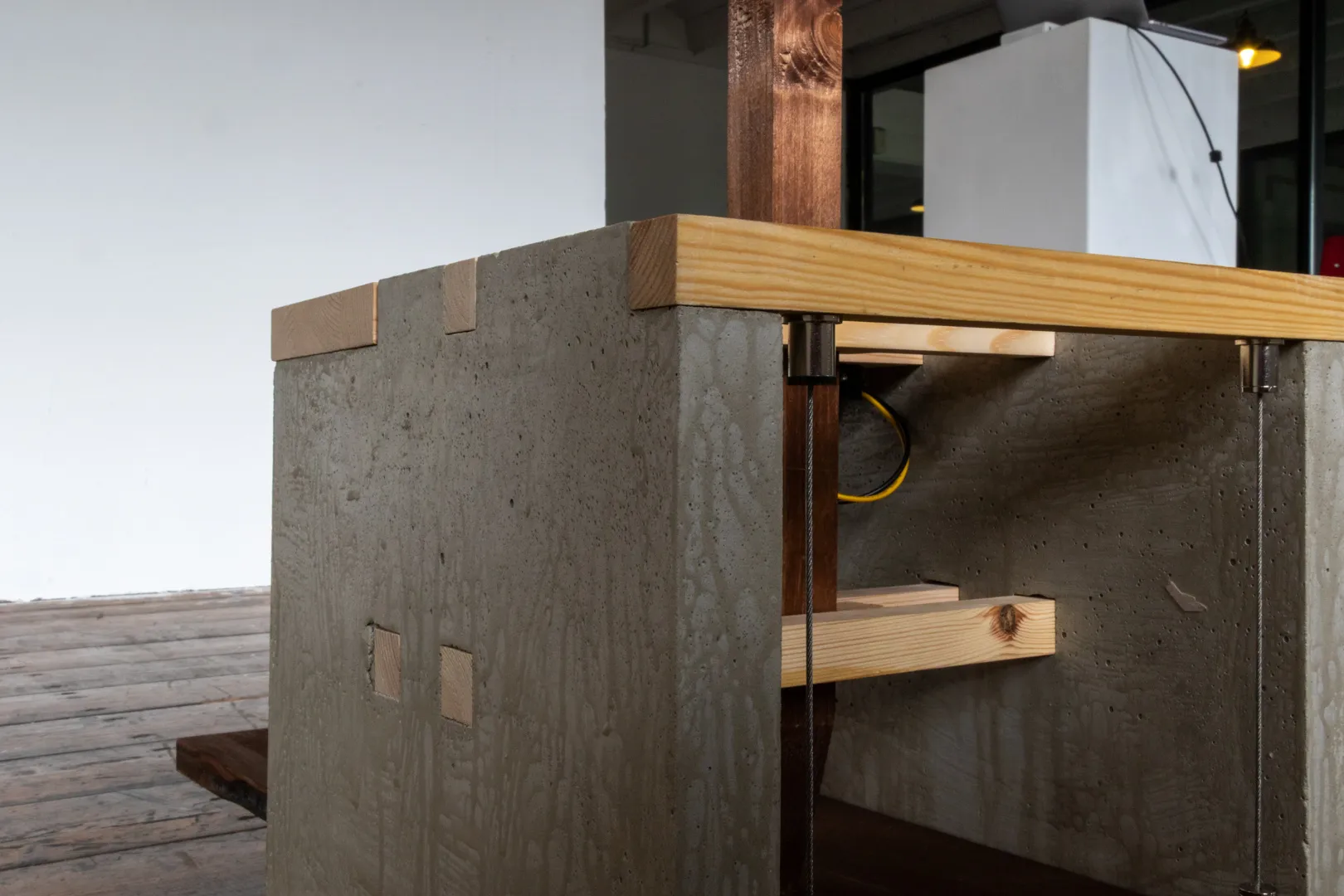
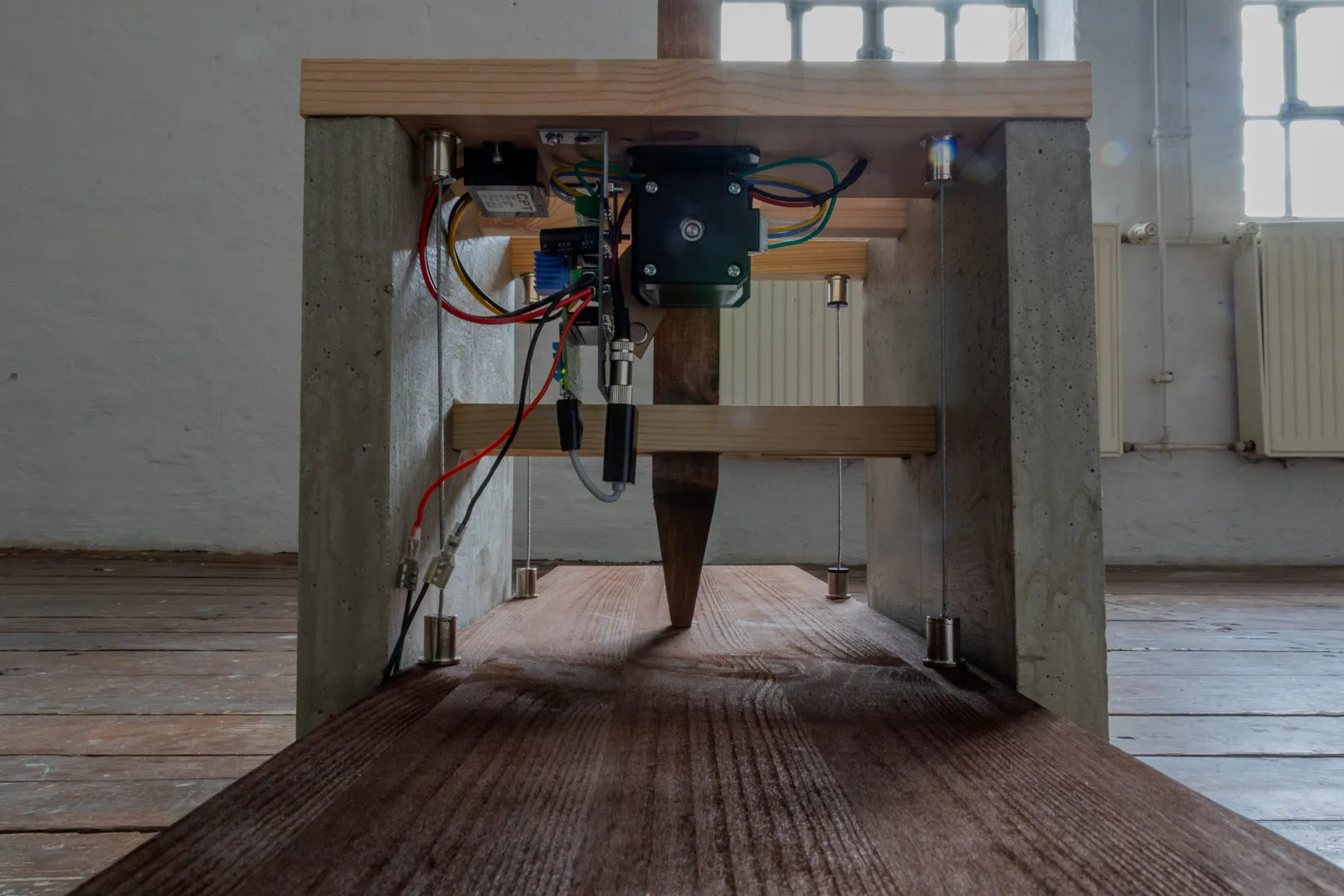
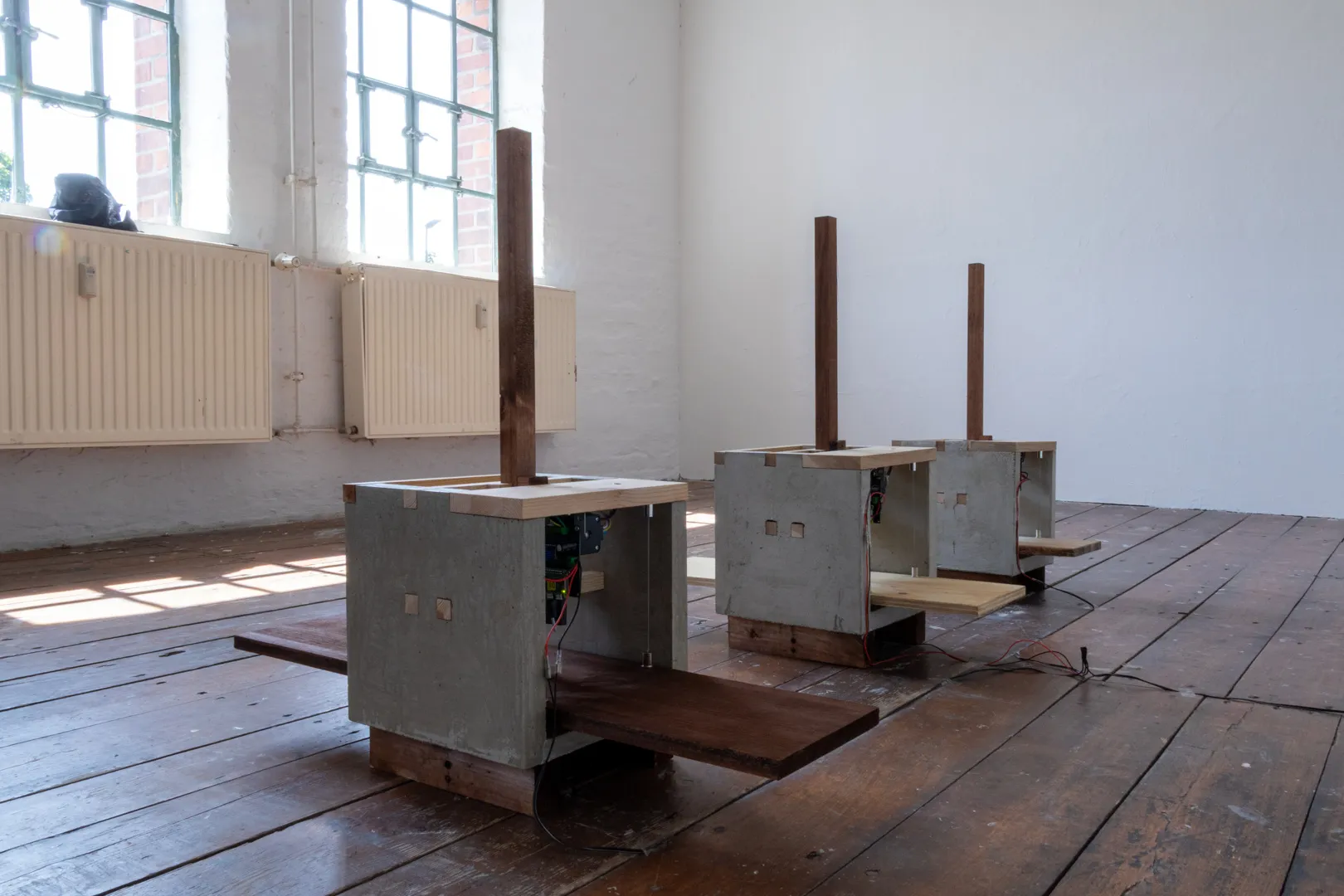
The project consists of three identical entities running the same structure and algorithm. Each entity repeatedly lifts and drops a wooden stomper onto a wooden plate via a simple cam mechanism. Each listens to its neighbors using an electret microphone mounted on top of its body and adjusts its tempo accordingly.
This project began with a simple question
How fundamental are timing and synchronization to digital systems?
Digital operations accumulate in precise units. Predictability is key. But what happens if we introduce ambiguity into this order?
Before turning to literature, I wanted to construct a loosened synchronization system, still digital at its core, but intentionally disrupted.
So I asked,
What if we insert a non-digitizable signal, something resistant to quantization, like sound, into this system?
Breath in Korean Traditional Music
How do performers in Korean traditional music synchronize without the meta-structures common in Western ensemble playing? Having trained in this practice, I know intuitively how it works. Yet explaining it is difficult. None of my teachers offered verbal clarity. Instead, we mimicked movement. We trained muscles and senses. In this tradition, we speak of “matching breath.” This is literal. The body rises with inhalation, falls with exhalation. Multiple players perceive this rise and fall, aligning their internal rhythms. Crucially, breath is not just a tool for mutual timing. Even in solo performance, the breath continues. Breath regulates the performer’s body, the instrument’s sound, and the surrounding time. With multiple players, this regulation becomes collective.
Firefly: Decentralized Synchronization in the Nature
Firefly synchronization appears in two forms:
- coordination of group movement
- alignment of flashing patterns during mating
The latter caught my attention. Certain species adjust their flash timing in response to nearby flashes. The mechanism, as I understand it, can be loosely represented:
for(auto& single : all_fireflies){
    single.GenerateBiochemicals();
    if(single.NeighborBlinked())
        single.FastForwardGeneration();
    if(single.GenerationDone())
        single.Blink();
    if(SuccessfulMating()) break;
}
I made a simple graphical simulation that demonstrates the algorithm of the fireflies synchronization.
축 /tsʰuk̚/: Reference of the Form
The external form of the project borrows from the Korean instrument Chuk. Chuk was used in ceremonial court music, originally imported from China. Today, it is categorized as an ‘instrument.’ But historically, its function was often metaphysical or political, rather than musical. I was drawn to its rect-linear geometry, its mechanical striking action, something primitive in both shape and sound.
I suspended its historical complexities, appropriating only its form and raw functionality.